Value Stocks vs. Growth Stocks: Key Differences
Welcome to InsiderTradeAlerts.com. Every active investor eventually faces a critical portfolio choice: prioritizing mature companies currently trading at a steep discount, or focusing entirely on fast-expanding innovators disrupting their industries. Understanding the nuances between these categories is absolutely essential for long-term financial success. Today, we will thoroughly explore "Value stocks vs. growth stocks: key differences—and how SEC Form 4 insider buying can complement each style".
While traditional financial metrics and charts help categorize equities, observing what corporate executives actually do with their own personal capital provides a massive, actionable edge. Whether you prefer the safety of steady dividends or the thrill of explosive revenue gains, watching executive behavior can independently confirm your fundamental thesis.
The Ultimate Source of Truth: SEC Form 4
Connection: Before diving into specific stock categories, understanding exactly how to read SEC Form 4 filings ensures you can properly utilize Insider Trading Notifications to support your chosen investment strategy.
When corporate directors, officers, and major shareholders trade equity in their own companies, they cannot do so in secret. The strict SEC reporting requirements for corporate officers mandate that these transactions be publicly disclosed within two business days. Therefore, SEC Form 4 is the ultimate, legally binding source of truth for tracking genuine executive sentiment.
At InsiderTradeAlerts.com, our proprietary system continuously monitors this flow of data. By systematically tracking insider ownership through EDGAR database feeds, we capture regulatory filings that arrive continuously throughout the day in near real time. We specifically filter our Insider Trading Activity Notifications for the coveted open market purchase code P. This specific transaction code indicates that an executive bypassed company stock grants and instead used their own hard-earned money to buy shares on the open market—a remarkably powerful vote of confidence.
Instead of constantly refreshing government databases manually, investors and financial professionals utilize our Insider Trading Alerts for Advisors and retail traders alike. Every single alert links directly back to the original Form 4 filing, ensuring complete transparency and verification. These real-time updates are sent directly via email and Telegram alerts, allowing you to react immediately the moment corporate management steps up to buy.
Understanding Value Stocks
Connection: Value investors naturally love a good bargain, and SEC Form 4 Insider Alerts can act as the ultimate timing mechanism, signaling exactly when corporate insiders believe the broader market has priced their shares far too cheaply.
At their core, value stocks represent companies that appear to be trading for significantly less than their fundamental worth. Investors constantly hunt for a distinct mismatch between intrinsic value vs market price. These companies are generally established, mature businesses generating steady cash flows, but they may be temporarily out of favor due to macroeconomic shifts, missed quarterly earnings, or broad industry transitions.
To locate these hidden gems, financial analysts rely heavily on fundamental analysis ratios for value investing, such as low price-to-book (P/B) ratios, strong free cash flow, or historically high dividend yields. A classic practical example of a value stock might be a legacy regional bank or an established utility provider. Following a sector-wide market correction, the bank’s stock might plunge despite possessing a highly solid balance sheet.
This scenario is precisely where identifying undervalued stocks with management confidence becomes crucial. If a stock looks cheap on paper, it might be a true bargain, or it could simply be a "value trap" destined to fall even further. However, when you combine low valuation multiples with sudden Form 4 insider buying, the narrative completely changes. Executives stepping up to actively purchase shares signals that the core business remains fundamentally resilient, and the recent market sell-off is heavily overdone.
Understanding Growth Stocks
Connection: Growth equities naturally carry higher expectations and elevated volatility, but timely Insider Trading Alerts can offer vital reassurance that leadership firmly believes in the company's aggressive future expansion trajectory.
Unlike traditional value plays, growth stocks are evaluated entirely based on their potential for rapid future expansion. These companies usually reinvest every dollar of their earnings back into research, product development, and massive market acquisition. Consequently, the primary goal for investors in this space is purely capital appreciation vs dividend yield.
A practical example of a growth stock is an early-stage artificial intelligence software firm or a clinical-stage biotech startup. These companies may not even be profitable yet, but their gross revenue is compounding by an impressive 40% year-over-year. Investors are more than willing to pay a premium multiple for this hyper-growth, hoping the company will dominate its sector in the coming decade.
However, growth investing carries unique and distinct dangers. When assessing small-cap growth vs large-cap value risks, growth companies are uniquely vulnerable to macroeconomic factors like interest rate hikes and rapidly shifting market sentiment. If a high-flying growth stock misses a revenue target by even a small margin, its lofty valuation can collapse rapidly.
This dynamic raises a common, critical question: why do executives buy stock on the open market even at historically high valuations? When an insider aggressively purchases shares of an expensive growth company with an open market purchase code P, it heavily implies that despite the premium price tag, the executive believes the company's future earnings will eventually dwarf current Wall Street expectations.
Comparing the Two: A Closer Look
Connection: Comparing fundamental performance metrics is significantly easier when you utilize Insider Trading Alerts to mathematically confirm your thesis for either stock category.
To effectively build modern growth vs value portfolio allocation strategies, you must deeply understand how these two styles contrast. For instance, when evaluating cyclical stocks vs defensive sectors, growth equities tend to thrive dramatically in bullish market environments, while value equities often offer a highly reliable defensive cushion during economic downturns.
A standard price-to-earnings ratio comparison instantly reveals that value companies sit comfortably at the lower end of the valuation spectrum. In stark contrast, growth companies consistently trade at high multiples, demanding flawless and continuous fundamental execution from leadership to justify their premium market pricing.
Framework: Integrating Insider Sentiment
Connection: Whether your portfolio heavily leans toward emerging software tech or steady traditional utilities, the validation of company fundamentals via Form 4 filings creates a highly tangible, data-driven edge for any investment strategy.
How exactly should you strategically merge these seemingly opposing concepts? Long-term market success ultimately lies in perfectly combining insider sentiment with fundamental analysis.
Here is a highly practical framework to properly utilize insider data for each distinct investing style:
For the Value Investor: Use insider data as your ultimate fundamental safety net. Screen for legacy stocks currently trading near their 52-week lows with incredibly low P/E ratios. Then, look closely for bullish signals from cluster insider buying. When three or four different corporate executives simultaneously purchase stock via transaction code P, it is a massive, undeniable indicator that the broader market's pessimism is entirely unwarranted. A cluster of buying proves a unified management belief in a turnaround.
For the Growth Investor: Use insider data primarily for momentum and narrative confirmation. Growth stocks routinely suffer aggressive, terrifying short-term dips. If a high-growth technology stock suddenly drops 15% on a relatively minor quarterly earnings miss, immediately check the latest SEC filings. If the CEO immediately buys thousands of shares, they are opportunistically capitalizing on the dip, forcefully signaling that the long-term, multi-year growth story remains completely intact.
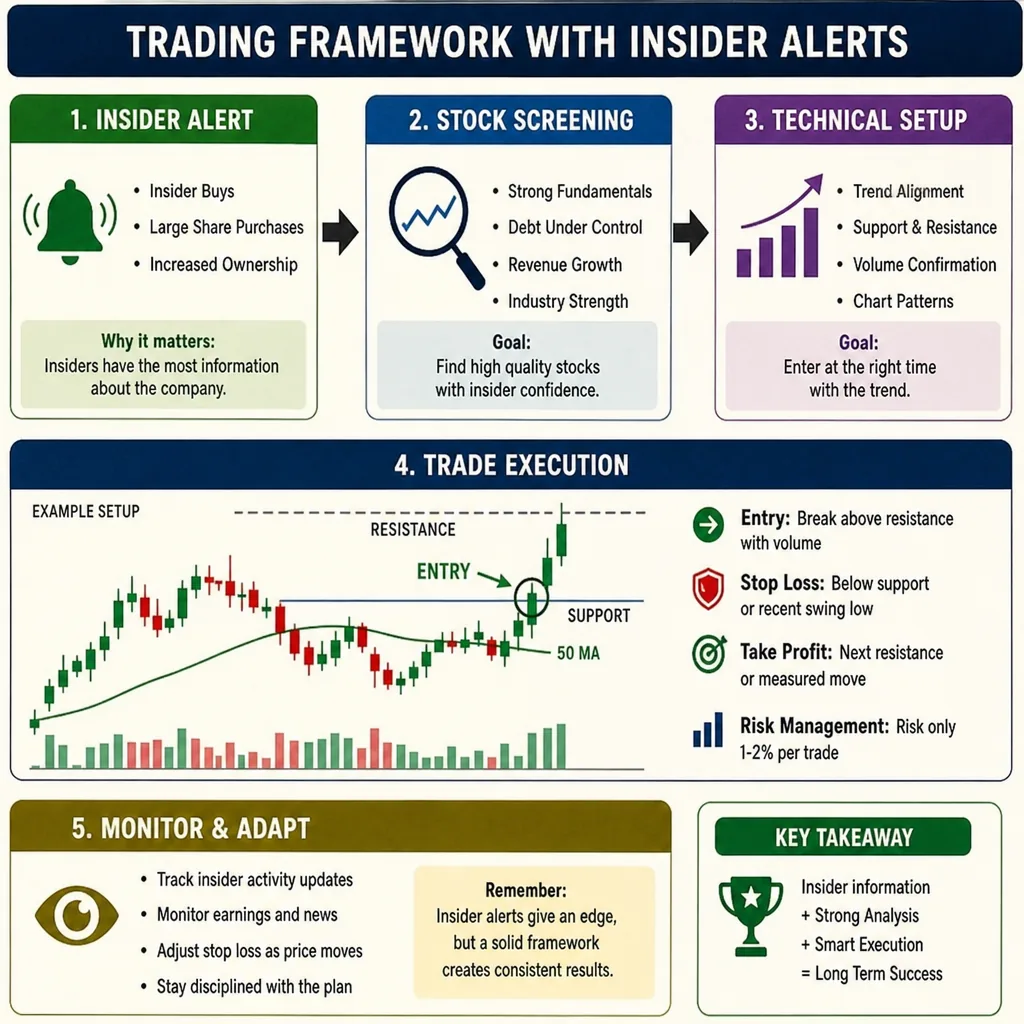
Elevate Your Investment Strategy Today
Deeply understanding the nuanced differences of both major investing styles empowers you to build a highly resilient, well-rounded portfolio. More importantly, when you intelligently overlay this foundational knowledge with the real-time tracking of executive behavior, you effectively remove the emotional guesswork from your decision-making process.
Are you ready to see exactly what corporate insiders are aggressively buying right now? Join InsiderTradeAlerts.com today and start a free 2-week trial. Subscribe to our comprehensive insider trading alerts to receive legally verified, real-time EDGAR notifications directly to your email and Telegram, completely risk-free. Stop guessing, and start investing alongside the executives who know their companies best.